
Carrier, MGA, and TPA teams rarely struggle because they lack data—they struggle because the right data arrives late, arrives in the wrong shape, or forces people to re-key it across underwriting and claims.
That’s where partner integrations matter. When core workflows can validate and enrich information consistently, operations become more predictable and service levels improve.
Many insurance organizations rely on ISO/Verisk services and datasets as part of normal underwriting and claims processes. The challenge isn’t whether those sources are valuable—it’s how smoothly teams can incorporate them into the work they already do.
When integrations are brittle or manual, staff spend time tracking down records, attaching documents, and reconciling mismatched identifiers. Over time, that creates delays, increased leakage risk, and inconsistent customer experiences.
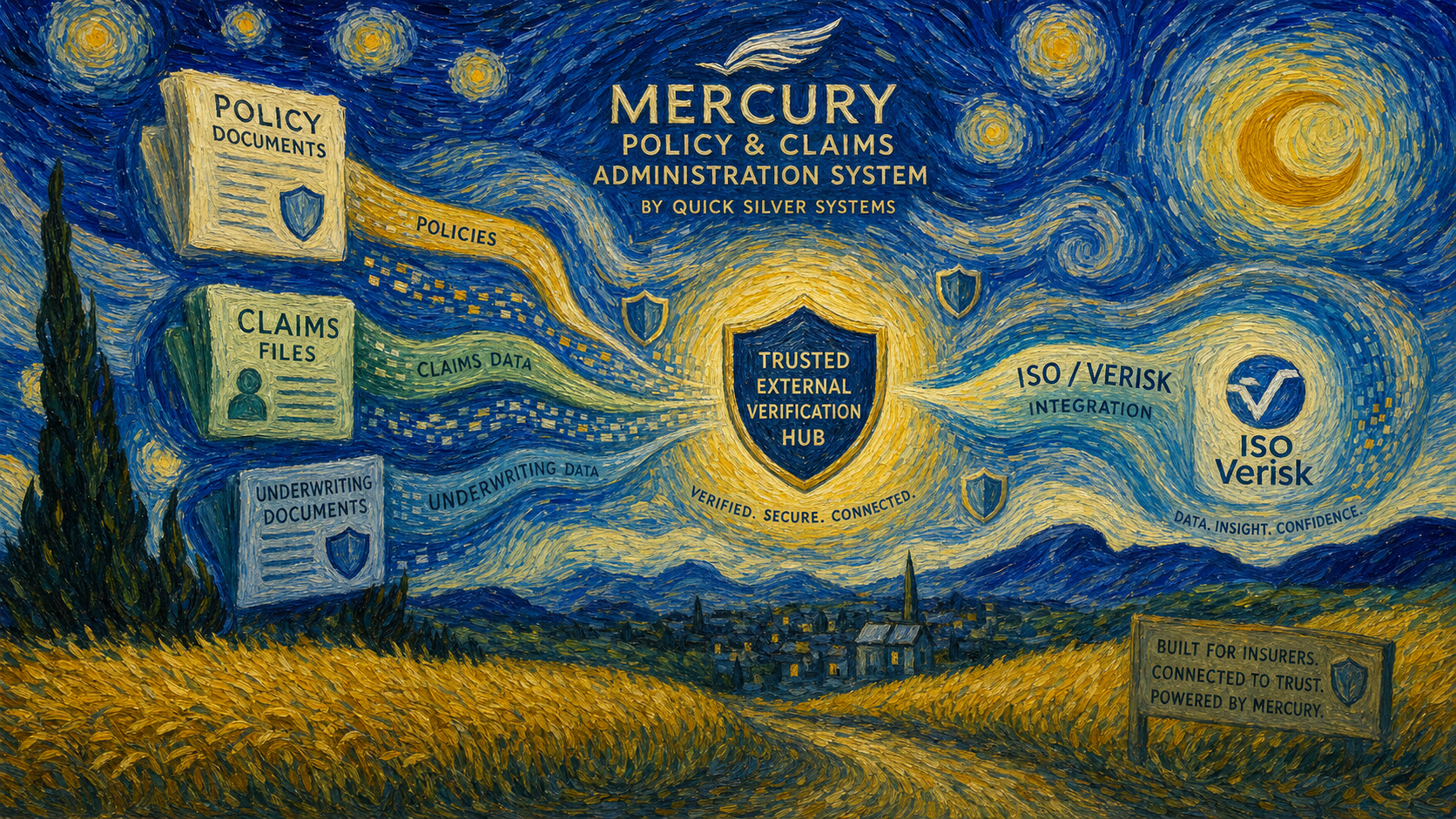
Mercury supports ISO/Verisk partner integration in a workflow-first model. Instead of treating integration as a one-off step, you can align it to stages in the policy or claim lifecycle.
While every program is different, implementations often focus on a few measurable outcomes:
Integrations are most valuable when they handle the normal case automatically and make the exception case easier. Mercury can help teams define what “normal” means—then support exception queues, escalations, and structured follow-up tasks when results don’t match expectations.
This approach reduces the temptation to bypass checks under time pressure, which is a common driver of inconsistent outcomes across teams and regions.
To get the most from an ISO/Verisk integration, teams often align on a few practical decisions:
Partner integrations should make the core system feel simpler: fewer screens to check, fewer places to copy information, and fewer surprises late in the process.
If you’re evaluating how to connect ISO/Verisk services to the work your teams do every day, Mercury can help you standardize validation and reduce operational friction without slowing the business down.


 Prior
Prior 