



Shows how carriers, MGAs, and TPAs can use Mercury report builder to organize operational views around recurring team questions.
Read More...
Mercury supports self-service workers' compensation audits, helping carriers, MGAs, and TPAs organize audit information for policy operations.
Read More...
Carriers, MGAs, and TPAs can consider driver-behavior telematics within commercial auto policy operations.
Read More...
Insurance teams can consider how Mercury's low-code/no-code configuration supports workflow adjustments as carrier, MGA, or TPA operations evolve.
Read More...
Carriers, MGAs, and TPAs can evaluate Mercury document imaging and NLP in insurance document workflows, with clear review responsibilities and ownership.
Read More...
Carriers, MGAs, and TPAs can use Mercury's screen builder to configure system screens around operational needs. This article offers a practical planning approach.
Read More...
Explore how an API-first approach can help insurance organizations plan consistent data exchange across policy and claims work with clear ownership.
Read More...
Carrier teams can make underwriting correspondence a repeatable part of policy work, with review steps aligned to their operating process.
Read More...
Carrier and TPA operations can use document retrieval to bring useful context from policy and claims records into staff review.
Read More...
Explore how a self-service first report of injury can give carriers and TPAs a clearer starting point for workers’ compensation claim intake.
Read More...
Carriers, MGAs, and TPAs can assess how a self-service audit capability fits workers’ compensation administration and their program requirements.
Read More...
Agency access in Mercury gives carriers a practical topic for reviewing distribution workflows and the role of connected policy and claims administration.
Read More...
Carrier teams can build on the ITC Vegas discussion by exploring Mercury AI capabilities and connected policy and claims operations in a focused demo.
Read More...
Carrier leaders can bring practical AI, document review, and workflow questions to a Mercury discussion at ITC Vegas. Meet Quick Silver Systems at booth 735 and continue the conversation with a demo.
Read More...
Carriers, MGAs and TPAs can discuss how Mercury document imaging and AI data import fit policy and claims workflows at ITC Vegas booth 735.
Read More...
Carrier teams can explore a practical starting point for importing quotes or plain data instead of repeating manual entry. Meet Quick Silver Systems at booth 735.
Read More...
Sean's blog invites lean carrier teams to bring document, policy, and claims workflow questions to Quick Silver Systems at booth 735.
Read More...
Mercury portal bill payments and reminders help carriers, MGAs, and TPAs keep billing work visible and service workflows on track.
Read More...
Mercury claims administration helps carriers, MGAs, and TPAs organize loss activity and keep review workflows clearer.
Read More...
Mercury digital signatures help carriers, MGAs, and TPAs keep policy and claims document work visible and moving.
Read More...
Mercury underwriting automation helps carriers, MGAs, and TPAs organize submissions and keep review steps visible as policy decisions move forward.
Read More...
Mercury single-click CAT classification helps carriers, MGAs, and TPAs organize catastrophe exposure and route claims work with greater speed and clarity.
Read More...
Mercury’s accounting-based system helps carriers, MGAs, and TPAs connect transactions and workflow context across daily policy and claims operations.
Read More...
Mercury workers’ compensation audits help carriers, MGAs, and TPAs collect payroll details, review exposure, and keep policy operations moving with clarity.
Read More...
Mercury AWS cloud SaaS helps carriers, MGAs, and TPAs connect policy and claims operations on a scalable, hosted foundation.
Read More...
A 1-100 fraud score helps carriers, MGAs, and TPAs prioritize document review and route claims work with consistent controls.
Read More...
Mercury low-code and no-code configuration helps carriers, MGAs, and TPAs adapt connected policy and claims workflows with greater clarity.
Read More...
Mercury IVR helps carriers, MGAs, and TPAs organize service conversations and route requests into connected workflows.
Read More...
Mercury PCI-compliant payment collection connects secure billing activity with the workflows carriers, MGAs, and TPAs manage.
Read More...
Automated claims letters help carriers, MGAs, and TPAs keep decision messages consistent and connected to organized claims workflows.
Read More...
Configurable rating helps carriers, MGAs, and TPAs adapt pricing rules, keep quotes consistent, and align underwriting changes with business needs.
Read More...
Self-service FNOL gives carriers, MGAs, and TPAs a clearer starting record for claims review and routing.
Read More...
Mercury claims administration helps carriers, MGAs, and TPAs connect intake, review, decisions, and service actions in one consistent workflow.
Read More...
An accounting-based system helps insurance operations teams connect transactions, records, and workflow context across daily policy and claims work.
Read More...
Document imaging and NLP help insurance operations teams turn policy and claim records into organized context for more consistent work.
Read More...
Carriers, MGAs, and TPAs can use Mercury digital refunds to keep approved return activity connected to policy and claims operations.
Read More...
Mercury self-service portal bill payments and reminders help carriers, MGAs, and TPAs keep routine billing work moving.
Read More...
Mercury gives carriers, MGAs, and TPAs on-demand COI access through a self-service portal, helping teams keep certificate requests moving.
Read More...
Report builder helps carriers, MGAs, and TPAs organize policy, claims, and billing views for clearer action in Mercury.
Read More...
Automated underwriting letters help carriers, MGAs, and TPAs communicate policy decisions consistently while keeping follow-up visible in Mercury.
Read More...
HIPAA compliance planning helps carriers, MGAs, and TPAs connect protected information safeguards to accountable Mercury policy and claims workflows.
Read More...
An accounting-based Mercury foundation helps carrier, MGA, and TPA teams connect billing, claims payments, refunds, and reconciliation across daily operations.
Read More...
Single-click CAT classification helps carrier, MGA, and TPA teams identify affected policy and claims work and keep event response connected to Mercury operations.
Read More...
Low-code and no-code configuration helps carrier, MGA, and TPA teams adapt Mercury workflows while keeping policy and claims work consistent.
Read More...
Digital signatures help carrier, MGA, and TPA teams complete policy and claims documents within connected Mercury workflows while keeping approvals easier to track.
Read More...
Self-service FNOL helps carrier, MGA, and TPA teams capture first-loss details consistently so claims staff can begin organized review in Mercury.
Read More...
ISO and Verisk partner integration helps carriers, MGAs, and TPAs connect insurance data with policy and claims workflows for more consistent review.
Read More...
Self-service FROI intake helps carriers, MGAs, and TPAs collect workers’ compensation injury reports consistently and move information into Mercury faster.
Read More...
AWS cloud SaaS gives carrier, MGA, and TPA teams a scalable foundation for policy and claims operations in Mercury.
Read More...
AI RAG document search with NLP helps carrier, MGA, and TPA teams find policy and claims facts faster within Mercury workflows.
Read More...
Configurable rating gives carrier, MGA, and TPA teams a clearer way to adapt Mercury pricing rules as programs and underwriting requirements change.
Read More...
Digital payment workflows connect premium and claim transactions to the insurance records that carriers, MGAs, and TPAs already manage.
Read More...
Rate and quote exclusionary filters help carrier, MGA, and TPA teams apply eligibility rules early and keep quoting decisions consistent.
Read More...
Self-service portal payments and reminders help carriers, MGAs, and TPAs reduce billing friction and give policyholders clearer next steps.
Read More...
HIPAA compliance gives carrier, MGA, and TPA teams a disciplined foundation for sensitive insurance workflows and audit-ready operations.
Read More...
Automated underwriting letters help insurance teams keep decisions, next steps, and audit records consistent across carrier, MGA, and TPA workflows.
Read More...
Mercury API-first architecture helps carriers, MGAs, and TPAs connect partner data with policy and claims workflows for controlled, scalable integration.
Read More...
Mercury low-code/no-code configuration supports faster product changes with governed workflows, screens, and rules that stay maintainable for growing programs.
Read More...
An accounting-based foundation helps insurers strengthen controls, improve audit trails, and make billing and adjustments easier to reconcile across operations.
Read More...
See how Mercury’s screen builder helps insurers update forms and layouts faster while keeping policy and claims teams aligned.
Read More...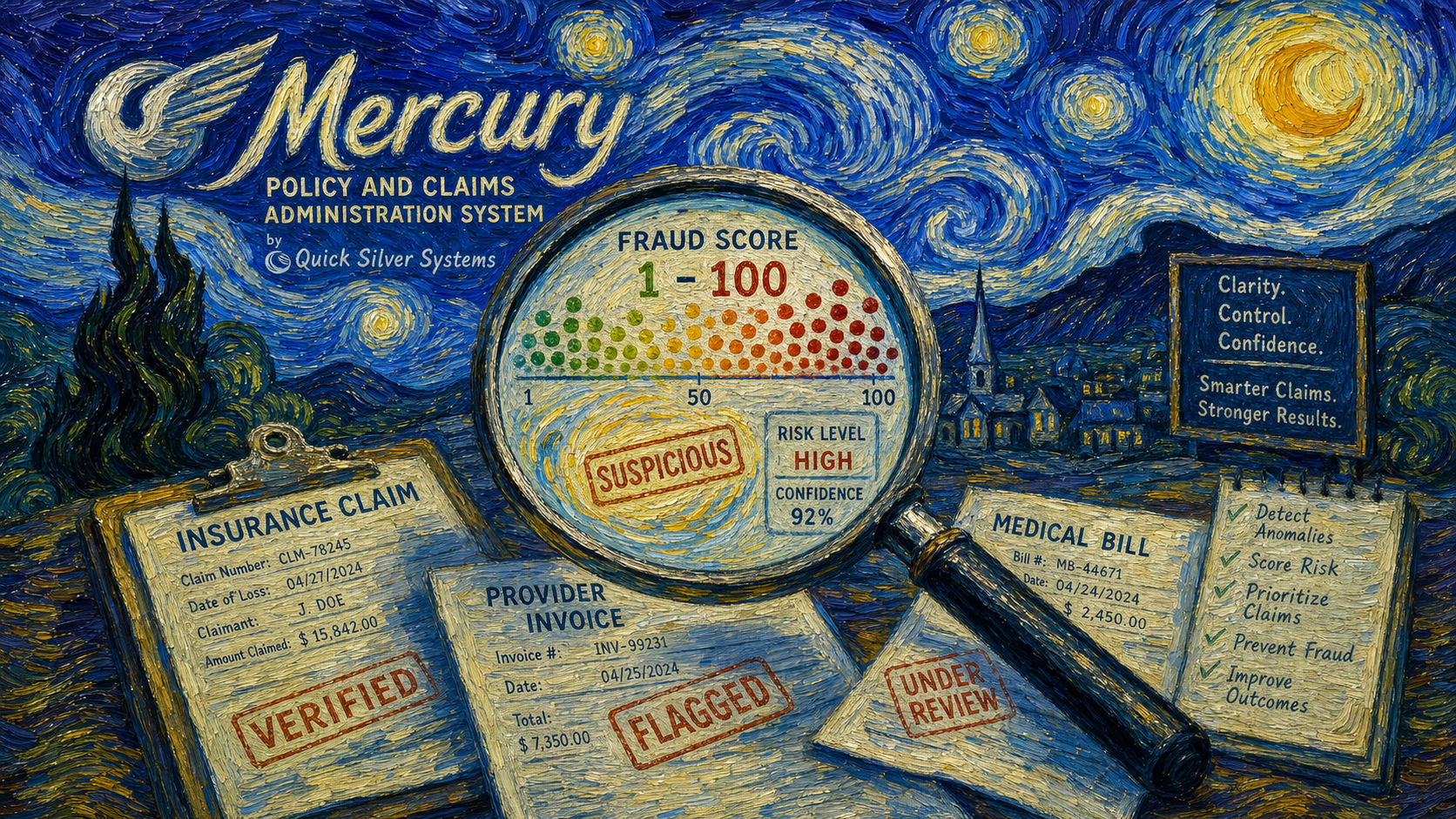
Mercury uses AI-powered document fraud scoring to help carriers, MGAs, and TPAs detect anomalies, prioritize investigations, and reduce leakage in claims.
Read More...
Mercury IVR helps route calls, capture context early, and improve service levels for policyholders across carriers, MGAs, and TPAs.
Read More...
Learn how driver-behavior telematics feeds underwriting and claims workflows so carriers and MGAs can spot risk trends and accelerate claim triage.
Read More...
See how a report builder turns policy and claims data into practical operational insights for carriers, MGAs, and TPAs without constant manual exports.
Read More...
Explore how automated claims letters standardize notices, reduce rework, and improve auditability for carriers and TPAs across the claim lifecycle.
Read More...
Automated claims letters in Mercury standardize customer updates, trigger the right notices at the right time, and keep carriers, MGAs, and TPAs audit-ready for carrier teams.
Read More...
Use Mercury’s AI RAG document search with NLP to locate key policy and claim details quickly, reduce rework, and support consistent decisions.
Read More...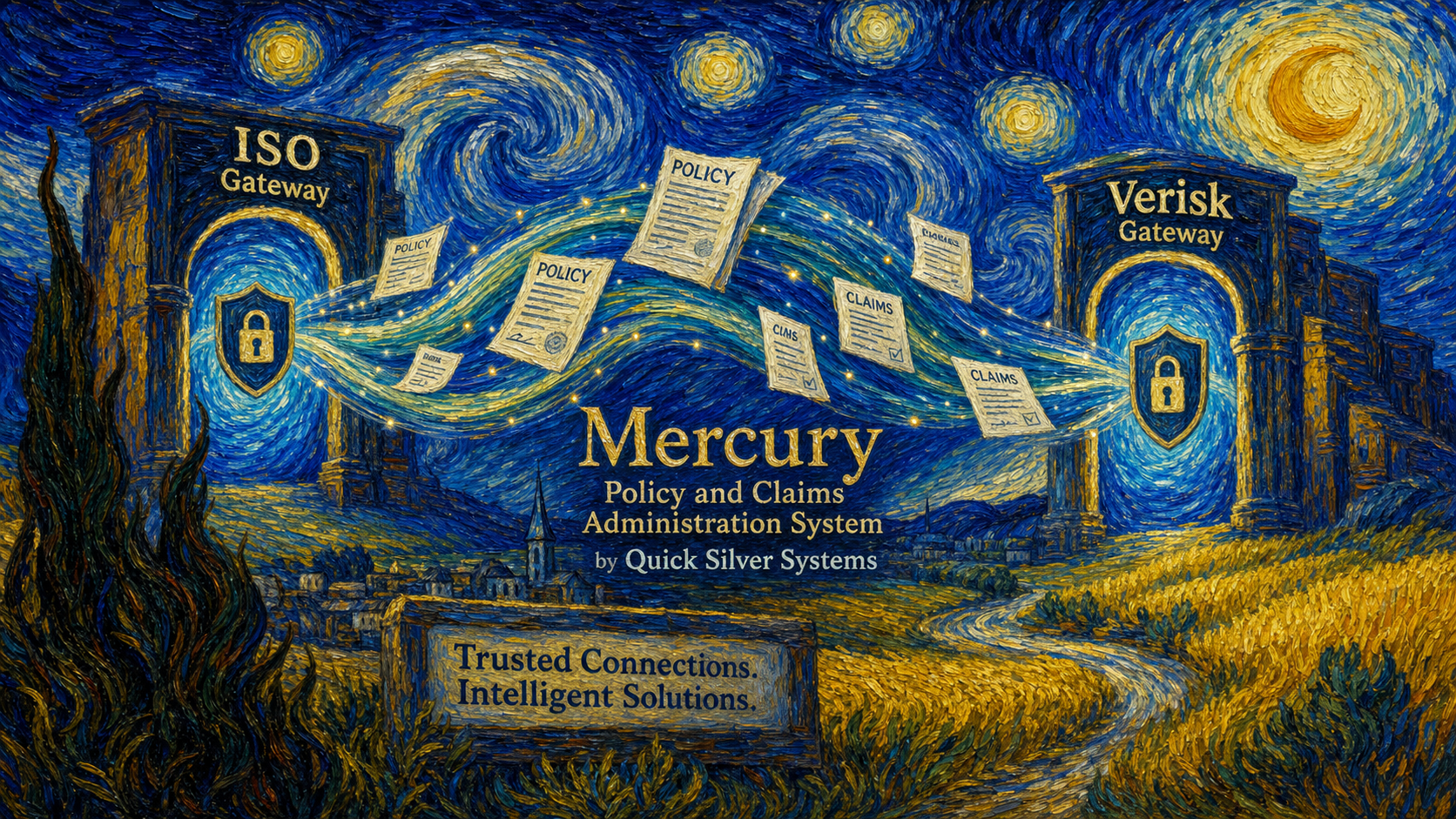
How carriers, MGAs, and TPAs can modernize operations with a practical, implementation-ready approach.
Read More...
A practical look at how automated underwriting letters improve consistency, compliance, and turnaround times for carriers, MGAs, and TPAs.
Read More...
How Mercury’s in-context e-signature capture speeds up applications, endorsements, and claims while preserving a legally defensible audit trail.
Read More...
How self-service work comp audits can reduce back-and-forth, improve submissions, and speed audit completion for carrier operations teams.
Read More...
How a screen builder supports role-based views, faster change cycles, and more consistent documentation across policy, claims, and billing teams.
Read More...
See how underwriting letters can be triggered by workflow milestones to improve consistency, auditability, and turnaround time for insurance operations.
Read More...
Add OFAC screening to key workflows so carriers, MGAs, and TPAs can check parties before payments or refunds and reduce compliance risk without slowing service.
Read More...
Learn how Mercury SMS messaging supports billing and claim updates with configurable notifications and audit-ready controls for insurers, MGAs, and TPAs.
Read More...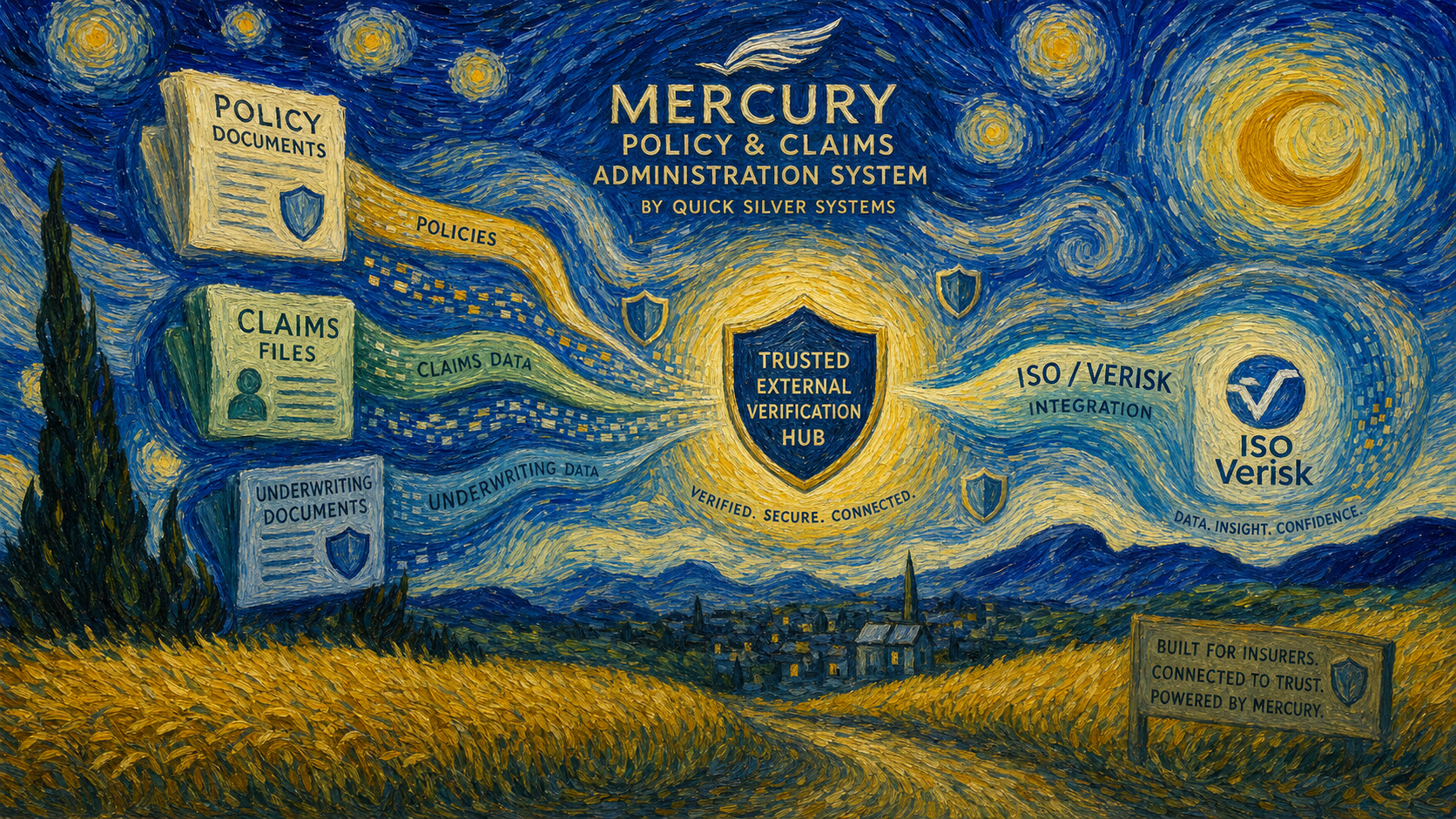
A workflow-first look at connecting ISO/Verisk services so carrier, MGA, and TPA teams can validate data faster and reduce rework.
Read More...
Learn how self-service FNOL in Mercury captures clean first-loss data and triggers routing so carriers and TPAs can set up claims faster.
Read More...
Mercury’s ISO/Verisk integration supports cleaner data exchange for P&C underwriting and claims, reducing rekeying and helping teams move decisions forward.
Read More...
Automated claims letters help teams deliver timely, consistent notifications from claim events while reducing follow-ups and supporting audit-ready documentation.
Read More...
Enable self-service reporting for underwriting, claims, billing, and compliance with configurable report definitions that reduce dependency on custom development work.
Read More...
Explore why an accounting-based approach helps insurers align billing and reconciliation with policy and claims activity, reducing surprises at close.
Read More...
A practical look at IVR routing patterns that help carriers, MGAs, and TPAs reduce transfers and speed service and intake workflows.
Read More...
Explore how Mercury standardizes underwriting steps, routes approvals, and improves visibility so carriers and MGAs can deliver faster, auditable decisions.
Read More...
Explains how Mercury report builder supports faster operational reporting for underwriting, claims, billing, and compliance, improving visibility for teams.
Read More...
A practical look at embedding OFAC screening in insurance workflows so carriers and MGAs can standardize checks, document outcomes, and stay audit-ready.
Read More...
See how Mercury IVR routes calls by intent and line of business to cut transfers, improve consistency, and reduce hold times for carriers and TPAs.
Read More...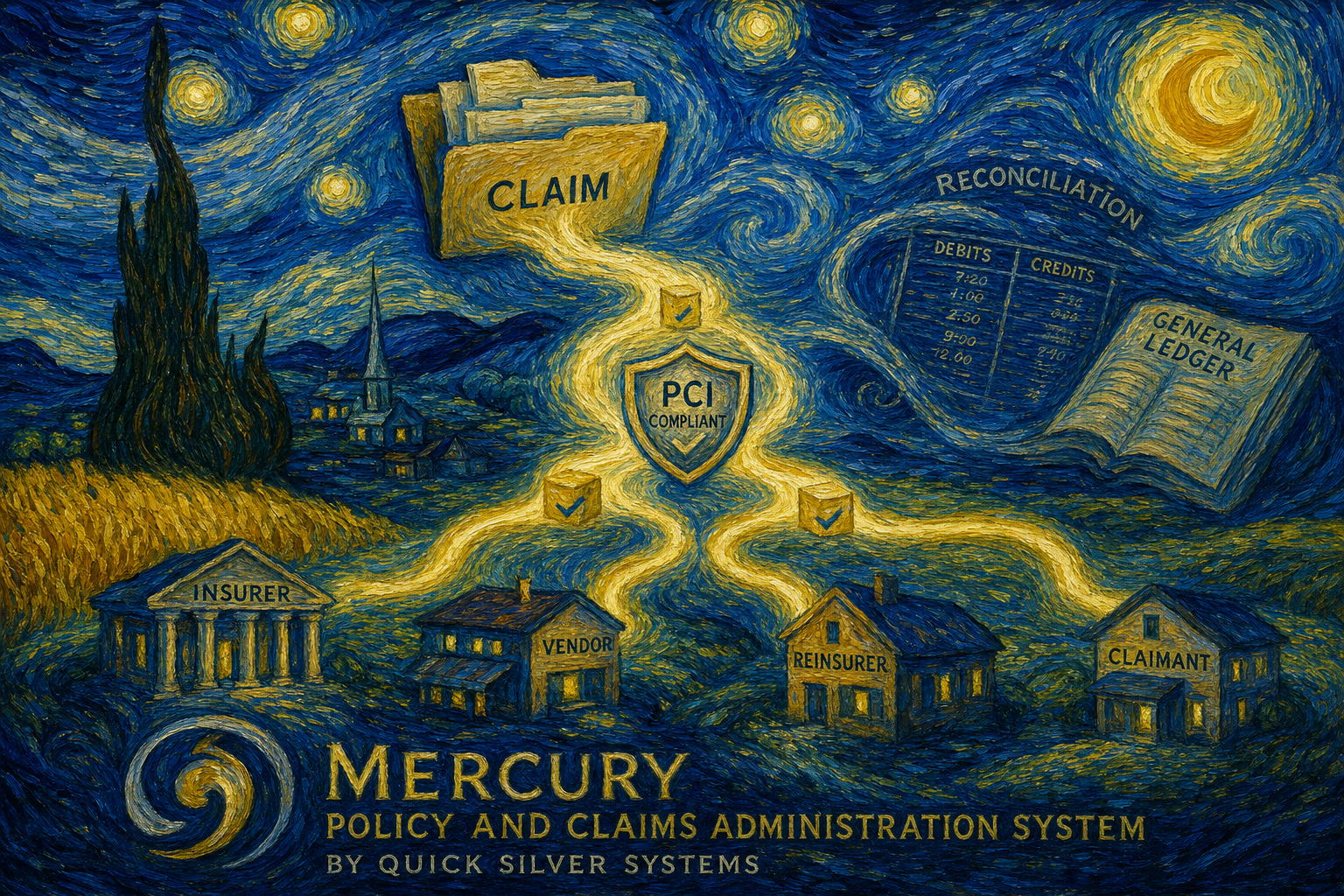
Modernize claims disbursements with faster digital payments, clear approval paths, and reconciliation-ready data for carriers, MGAs, and TPAs.
Read More...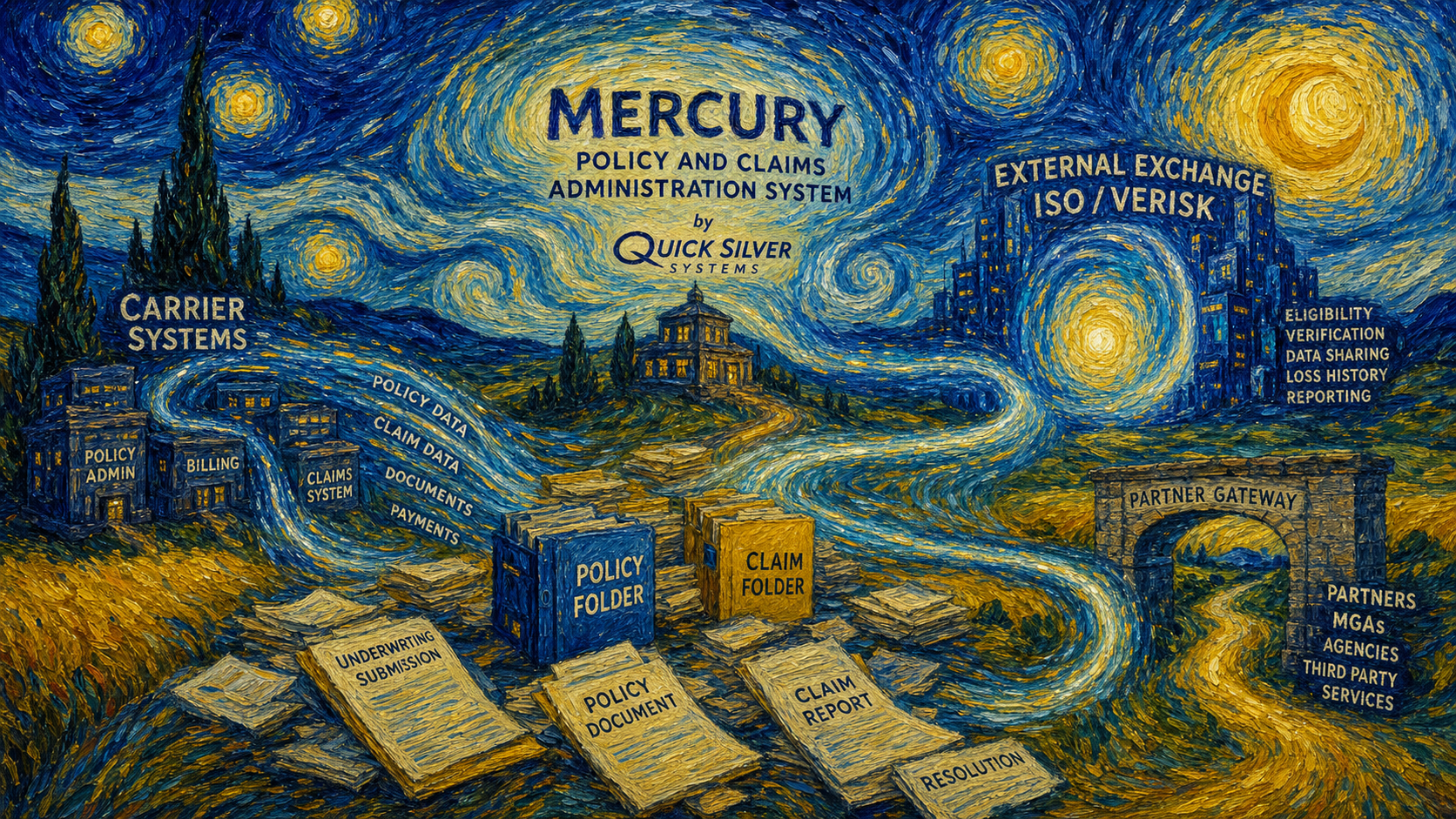
Mercury supports ISO/Verisk-connected workflows so carriers, MGAs, and TPAs can verify eligibility, share data, and retrieve loss history faster with fewer handoffs.
Read More...
See how carriers and MGAs can use driver-behavior telematics signals to improve selection, pricing, and claims decisions when those signals flow into Mercury workflows.
Read More...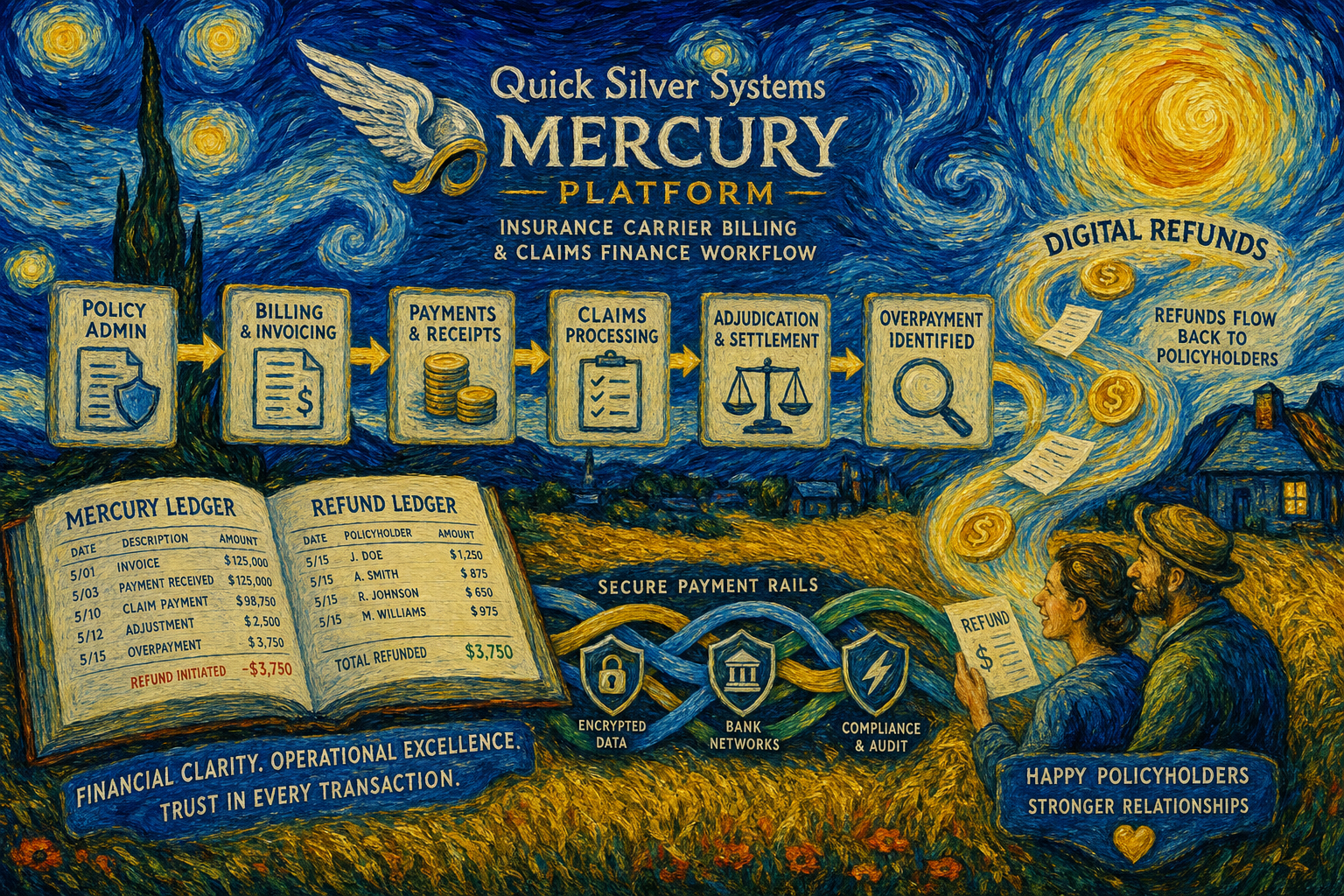
Mercury helps MGAs run side-by-side quotes across carriers from one submission, giving producers faster service and program partners a cleaner placement view.
Read More...
See how Mercury uses a 1–100 fraud score to help carriers and TPAs prioritize document review, reduce leakage, and keep decisions audit-ready across workflows.
Read More...
Mercury helps carriers, MGAs, and TPAs handle protected health data with governed access, audit trails, and retention controls inside one platform.
Read More...
Explore how NLP-powered search can help carriers and MGAs find policy, billing, and claims details faster, improving consistency while reducing rework.
Read More...
Mercury report builder helps carriers, MGAs, and TPAs standardize KPIs across policy, billing, and claims so leaders can spot bottlenecks and act sooner.
Read More...
A self-service FROI workflow helps employers submit complete injury reports up front, improving triage and downstream accuracy. Designed for workers’ comp teams.
Read More...
Mercury uses AI-based data import to standardize inbound data and cut manual mapping work, helping carriers and MGAs move from files to testable configurations faster.
Read More...
Mercury supports automated claims letters using configurable templates and event-driven triggers, helping insurance teams improve consistency and timeliness.
Read More...
A look at how secure agency access in Mercury can streamline submissions, endorsements, and claim collaboration while preserving controls and auditability.
Read More...
Mercury generates underwriting decision letters from policy data so carriers, MGAs, and TPAs cut manual work, improve consistency, and document each decision cleanly.
Read More...
Build role-based reporting from policy and claims activity so carrier, MGA, and TPA teams can monitor performance and take action without constant IT tickets.
Read More...
Mercury IVR supports configurable call routing for policy and claims inquiries, helping carriers, MGAs, and TPAs cut transfers and improve service response times.
Read More...
Self-service workers comp audits let insureds submit payroll and classification data directly, helping carriers, MGAs, and TPAs cut auditor follow-up and rework.
Read More...
A core built on accounting principles helps carriers and MGAs reconcile billing and claim payments faster, reducing exceptions and month-end friction.
Read More...
Self-service First Notice of Loss intake lets policyholders submit incident details directly, helping carriers, MGAs, and TPAs cut phone-tag and start claims faster.
Read More...
Mercury supports self-service portals for on-demand COIs, helping carriers, MGAs, and TPAs reduce service tickets while keeping certificates accurate and governed.
Read More...
API-first integration helps carriers, MGAs, and TPAs connect portals, billing, data, and partners with fewer manual handoffs, improving governance and operational visibility.
Read More...
How carriers, MGAs, and TPAs can use Mercury's 1-100 document fraud score to triage claims faster, standardize referrals, and strengthen audit-ready investigations.
Read More...
Mercury helps carriers, MGAs, and TPAs streamline claim intake by turning inbound documents into structured data using imaging and NLP, cutting rekeying and delays.
Read More...
A 1-100 document fraud score helps carriers, MGAs, and TPAs triage claims intake, prioritize review, and keep routine documents moving.
Read More...
Learn how single-click CAT classification supports faster, more consistent claims triage for P&C carriers, MGAs, and TPAs when catastrophe events hit.
Read More...
Document imaging and NLP help carriers, MGAs, and TPAs turn unstructured claim paperwork into usable data faster, improving throughput and auditability.
Read More...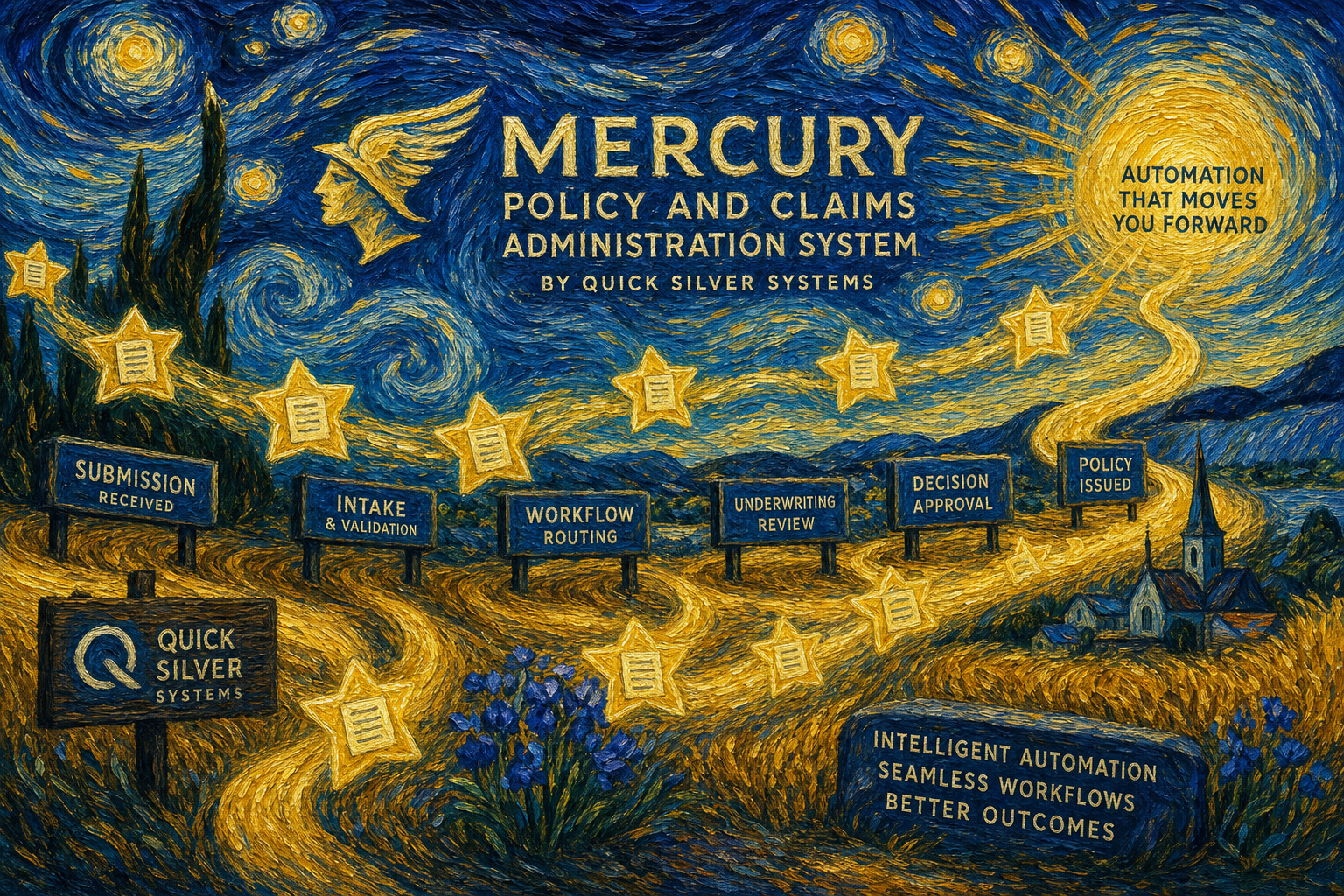
Mercury automates underwriting routing, rule enforcement, and straight-through processing so P&C carriers and MGAs can move submissions faster with fewer manual touchpoints.
Read More...
Mercury lets claims teams classify catastrophe events in a single action, activating CAT workflows and improving reserve accuracy for carriers and TPAs during high-volume loss events.
Read More...
Pricing needs change fast for program business and new filings. Mercury’s configurable rating helps carriers and MGAs tune factors and rules without slowing operations.
Read More...
Mercury helps carriers, MGAs, and TPAs configure underwriting and claims workflows with low-code automation so teams can iterate quickly while keeping governance.
Read More...
Mercury gives P&C carriers and MGAs a configurable rating engine to update rate tables and factors without code changes, accelerating time-to-market for rate revisions.
Read More...
Explore how Mercury supports digital claims payments so carriers, MGAs, and TPAs can speed disbursements while keeping approvals, audit trails, and controls intact.
Read More...
A practical look at capture-once workflows for MGAs, routing submissions to multiple carriers while keeping downstream policy and claims servicing aligned.
Read More...
Mercury NLP document imaging and AI fraud scoring gives P&C carriers and TPAs a 1-100 risk signal on every claim document before adjudication begins.
Read More...
How API-first integration and governance help carriers, MGAs, and TPAs modernize policy and claims operations.
Read More...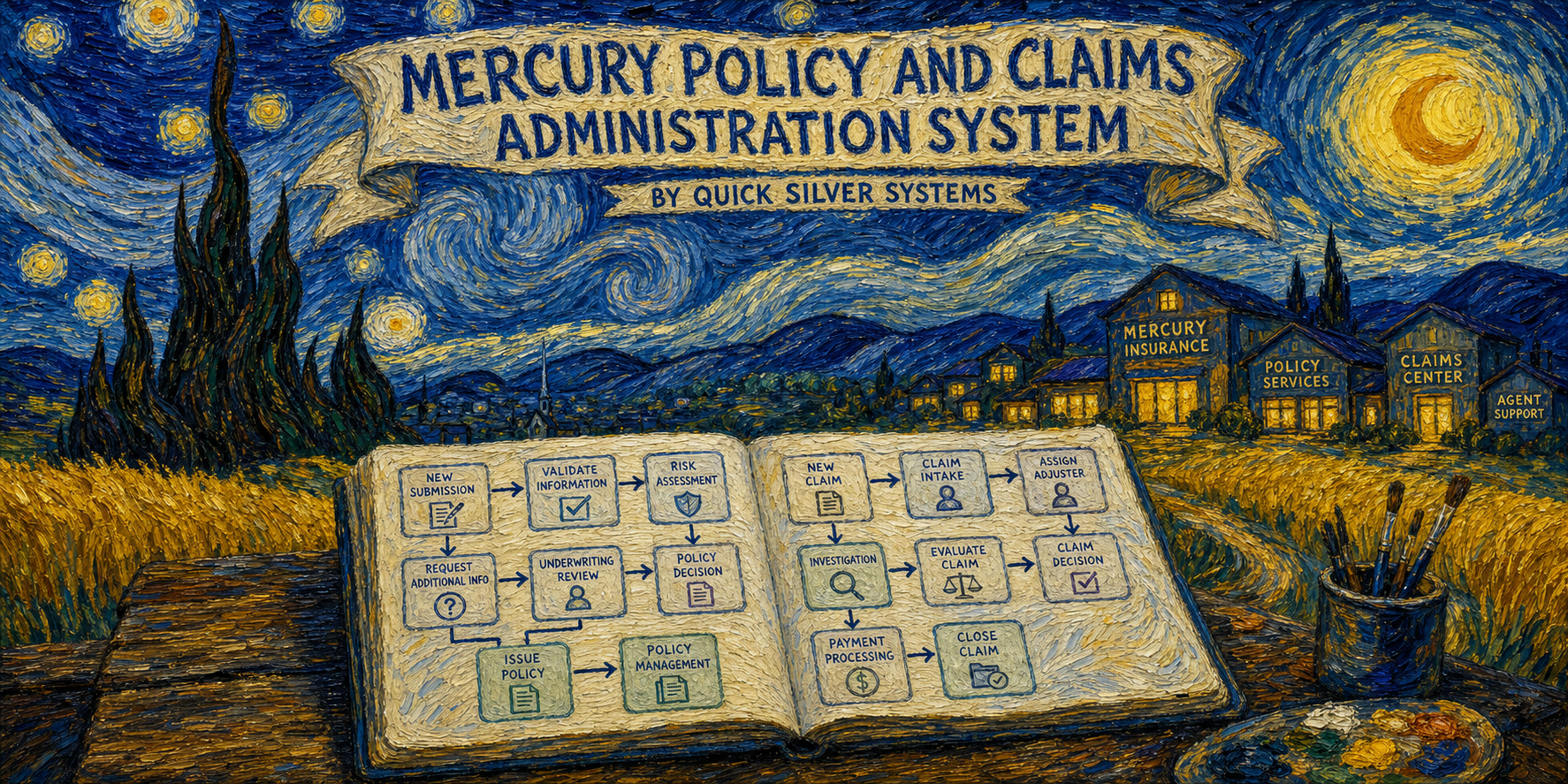
A practical playbook for modernizing underwriting and claims workflows with low-code configuration and governance.
Read More...
Sean on how Mercury's NLP document imaging and AI fraud scoring gives adjusters a 1-100 risk signal on every claim document before adjudication begins.
Read More...
Sean on why driver-behavior telematics has to live inside the policy and claims platform, not in a vendor portal nobody reconciles back to the loss data.
Read More...
Sean on why one-click CAT classification in the claims core decides clean reinsurance accounting from day one versus rebuilding it weeks after the event.
Read More...
Sean on why MGAs that quote and bind across multiple carriers from one Mercury screen win submissions other distribution models cannot match in time-to-quote.
Read More...
Sean on why a configurable rating engine inside the core platform decides whether filed rate updates ship in days versus quarters, with a versioned, auditable trail.
Read More...
Sean on why insured, producer, and claimant self-service -- including on-demand certificates -- is one of the fastest-paying capabilities in a Mercury Platform rollout.
Read More...
Sean on why document imaging, NLP extraction, and AI-powered document fraud detection belong inside the core Mercury platform rather than in a parallel toolchain beside it.
Read More...
Sean on why submission-to-bind cycle time is the underwriting metric that deserves its own dashboard, and how the Mercury Platform was designed to compress it.
Read More...
Every capability that will matter in insurance over the next ten years — pricing, fraud, customer experience, automation — runs on data foundations being built right now.
Read More...
Too many insurance technology APIs are designed from an internal architecture perspective. The APIs that create ecosystem value are designed from the outside in.
Read More...
Commercial auto loss experience in recent years has shown that frequency and severity trends can diverge significantly — and why managing both dimensions separately matters.
Read More...
AI-powered fraud analytics are improving carrier detection capabilities significantly, but fraud schemes are also evolving in response to better detection — it's an ongoing competition.
Read More...
Quick Silver Systems built Mercury to give P&C carriers, MGAs, and TPAs enterprise-grade policy administration with the configurability that growing programs demand.
Read More...
Reserve adequacy is both an actuarial discipline and a governance challenge. The pressures that lead to under-reserving are structural and persistent.
Read More...
Technology investment proposals in insurance often focus on the cost and risk of change. The cost of maintaining legacy systems and foregoing capability is rarely calculated with equal rigor.
Read More...
The integration of satellite imagery, building permit data, and environmental sensors into commercial property underwriting is reshaping how carriers assess and price risk at submission.
Read More...
How carriers respond to shifting climate risk is no longer purely about pricing and withdrawal. It's about how the industry defines its role in a changing risk environment.
Read More...
The institutional knowledge embedded in experienced insurance professionals is irreplaceable. Mentorship is the primary mechanism for transferring it before it walks out the door.
Read More...
The E&S market has absorbed significant risk over the past several years that standard markets declined. The concentration of that risk deserves more attention than it gets.
Read More...
Insurance organizations can get caught in perpetual transformation cycles. Knowing when to shift from change mode to execution mode is a critical leadership judgment.
Read More...
Parametric triggers are moving beyond their traditional home in cat reinsurance and entering commercial lines where speed and certainty of payout are valued over indemnity precision.
Read More...
Business continuity planning in insurance has evolved from disaster recovery checklists to continuous operational resilience frameworks that assume disruption is inevitable.
Read More...
Most P&C carriers segment customers by product type and rate tier, not by behavior or need. The gap between that and genuine personalization is where opportunity lives.
Read More...
MGAs have become a central feature of the P&C landscape, but questions about oversight, data ownership, and capacity commitment remain live issues for both carriers and program administrators.
Read More...
The carriers and intermediaries that defined their flexible work models clearly and early are now using them as a genuine talent competitive advantage.
Read More...
As AI tools proliferate in underwriting workflows, the most important design question is how they augment human judgment rather than replace it prematurely.
Read More...
Insurance core system modernization projects are often evaluated on short time horizons. The real return — in speed, flexibility, and capability — accumulates over years.
Read More...
Smart home sensors and connected devices are giving personal lines carriers unprecedented visibility into risk conditions that were previously invisible between policy periods.
Read More...
Insights from behavioral economics — about how people actually make decisions rather than how they theoretically should — are reshaping how insurance products are structured and presented.
Read More...
The insurance industry has been talking about its talent pipeline challenge for a decade. Talking is not the same as solving it.
Read More...
Carriers that want to improve policy retention need to identify flight-risk accounts before they shop — and that requires predictive analytics, not reactive service improvements.
Read More...
After years of being treated as a cost center, loss control is re-emerging as a strategic function that improves underwriting outcomes and deepens insured relationships.
Read More...
Insurance technology transformation projects that stall or fail are almost always undone by adoption challenges, not technical ones. The people side is where the work is.
Read More...
Small commercial has long been an underserved segment because the economics of traditional distribution made it unattractive. Digital tools are changing that calculus.
Read More...
In an industry where demands compete relentlessly for attention, the leaders and teams that deliver are the ones with disciplined focus on what actually matters.
Read More...
When reinsurance capacity is abundant and pricing is favorable, carriers tend to underinvest in reinsurer relationships. That neglect is costly when markets harden.
Read More...
The expansion of specialty insurance lines is outpacing the supply of experienced underwriters, creating both a talent gap and a risk selection challenge.
Read More...
Many insurance technology conversations treat API availability as the end goal. The strategic value comes from what well-designed APIs make possible across the ecosystem.
Read More...
Rate increases alone won't solve the homeowners insurance crisis in high-risk states. The industry needs to engage on exposure, mitigation, and long-term insurability together.
Read More...
High-performing insurance organizations need clear accountability structures, but leaders who conflate accountability with blame damage the psychological safety that drives innovation.
Read More...
Technical pricing excellence is a competitive advantage, but carriers that can't access the right risks at scale aren't getting the benefit of their underwriting models.
Read More...
The 2025 catastrophe season tested the assumptions behind widely used cat models in ways that will drive significant recalibration across the industry.
Read More...
Third-party administrators are under growing pressure to provide real-time claims data and performance analytics to the carriers and self-insureds they serve.
Read More...
Cyber insurance premium growth has been dramatic, but the risk modeling infrastructure supporting that growth is significantly less mature than in other P&C lines.
Read More...
The pace of change in insurance means executives will rarely have complete data before a decision is required. Comfort with uncertainty is now a leadership skill.
Read More...
The volume and granularity of telematics data now available to auto carriers is outpacing actuarial frameworks designed for aggregate risk buckets.
Read More...
Frictionless claims handling is the gold standard in customer experience. The carriers getting there are redesigning the journey from the claimant's perspective.
Read More...
Expanding across state lines in P&C insurance means navigating 50 different regulatory environments. The compliance overhead is real and growing.
Read More...
Too many insurance cloud conversations get stuck on infrastructure cost. The more important question is what cloud enables that on-prem never could.
Read More...
The underwriting role has been reshaped by data tools and automation. What it means to be a great underwriter looks different than it did five years ago.
Read More...
Carriers investing in AI are discovering that model performance is only as good as the data feeding it. The real work is upstream.
Read More...
Embedded insurance is not a distribution trend — it's a product architecture challenge that exposes legacy system limitations fast.
Read More...
Automated claims triage is no longer a differentiator — it's the baseline. Here's why the laggards are feeling it now.
Read More...
Mercury Policy and Claims Administration System was designed from the ground up around the real operational challenges P&C carriers face. Here is why that starting point still shapes everything we do.
Read More...
In a world of podcasts, video content, and social media, the leaders who maintain a deliberate reading practice are building a depth of thinking that faster-consuming peers rarely match.
Read More...
The rise of TNC and gig economy driving has forced a fundamental rethinking of commercial auto liability frameworks. The solutions that have emerged are instructive for other evolving risk categories.
Read More...
The carrier-insurtech partnership model has matured considerably. The programs that deliver results share a quality that the unsuccessful ones consistently lack: honest expectation-setting from the start.
Read More...
Strategic patience and operational urgency are not opposites in insurance leadership. The best leaders cultivate both simultaneously.
Read More...
Underinsurance in commercial property has become a material market issue. Closing the valuation gap requires better data, better tools, and more honest conversations with policyholders.
Read More...
Competitive advantage in insurance is increasingly being determined by data infrastructure decisions made years before the advantage is visible in underwriting results.
Read More...
The intersection of health data interoperability and workers compensation is creating new opportunities to improve outcomes, but also new governance obligations.
Read More...
Binding authority arrangements create real risk for both the MGA and the carrier. The programs that survive market cycles are the ones with rigorous governance from the start.
Read More...
Distributed insurance teams face a context problem that no collaboration tool fully solves. The leaders who address it intentionally build the most cohesive remote organizations.
Read More...
While much AI in insurance is still in early deployment, predictive claims triage has accumulated enough real-world data to evaluate its impact with confidence.
Read More...
Most carriers are better at distributing existing products than inventing new ones. Building genuine product innovation capability requires structural changes, not just ideation sessions.
Read More...
Rising loss costs, telematics adoption, and new entrant strategies are converging to reshape the personal auto insurance market in ways that will take several years to fully play out.
Read More...
As specialty lines continue to expand into emerging risk categories, the demand for experienced underwriters in those segments is significantly outpacing supply.
Read More...
Carriers moving to cloud-native core systems are discovering that the hardest challenges are not technical. They are organizational, cultural, and process-related.
Read More...
For years, insurance CX was measured by surveys that nobody acted on. The shift toward operational CX metrics is changing what carriers actually improve.
Read More...
The early years of insurance AI were defined by pilots and proofs of concept. The next phase is defined by governance, explainability, and regulatory scrutiny.
Read More...
Claims outcomes are increasingly shaped by the vendor network surrounding the core adjustment process. Managing that ecosystem is a strategic function, not an administrative one.
Read More...
STP has transformed personal lines efficiency. The commercial lines market is now in the early stages of a similar journey, with different complexity and higher stakes.
Read More...
Leaders are rewarded for having answers. But the most consequential leadership moments are almost always defined by the quality of the questions being asked, not the answers being given.
Read More...
Decades after the NFIP was created, tens of millions of Americans in flood-prone areas remain uninsured for flood losses. The private market is changing the equation, slowly.
Read More...
The TPA relationship is changing. The organizations that recognize this shift early will extract capabilities and capacity that purely transactional TPA relationships cannot deliver.
Read More...
Maintaining rate adequacy in a dynamic loss environment is one of the most technically demanding challenges in P&C underwriting. The carriers doing it well have built a specific capability.
Read More...
As insurance operations become more data-intensive, the professionals who bridge technical outputs and business judgment are becoming the most valuable people in the room.
Read More...
The ability to extract structured data from unstructured insurance documents has matured from research experiment to production capability with measurable returns.
Read More...
Parametric triggers are not a niche innovation. They are becoming a meaningful coverage solution for risks where traditional loss verification is too slow or too expensive.
Read More...
How a carrier manages its reinsurance relationships affects more than pricing. It shapes what risks the carrier can write, how it grows, and how resilient it is to adverse development.
Read More...
A carrier can have the right technology, the right products, and the right market position and still underperform because of the culture running beneath all of it.
Read More...
The shift from claims payer to risk partner is accelerating. The carriers making this transition successfully are changing the economics of the relationship with their policyholders.
Read More...
Insurance carriers that understand the API economy are operating on a different velocity curve than those treating integrations as one-off IT projects.
Read More...
FNOL is where the claims experience is made or broken. Most executives know this in theory. Far fewer have a clear picture of what actually happens at that moment in their organization.
Read More...
Early cyber insurance was largely application-form underwriting. The market that emerges in 2026 is being shaped by a fundamentally different approach to risk assessment.
Read More...
Attracting insurance talent is hard. But the deeper challenge is creating an environment where capable people can do their best work once they arrive.
Read More...
The first week of January is the optimal time to assess whether your technology stack is still serving your strategy, before the year builds momentum and inertia sets in.
Read More...
There is a habit in insurance of leading with the challenges. But heading into 2026, there are genuine reasons for optimism worth naming.
Read More...
