
For carriers, MGAs, and TPAs, underwriting and claims decisions are only as good as the data behind them. When teams have to leave the core system to confirm eligibility, pull loss history, or validate third-party information, cycle times stretch and operational risk climbs.
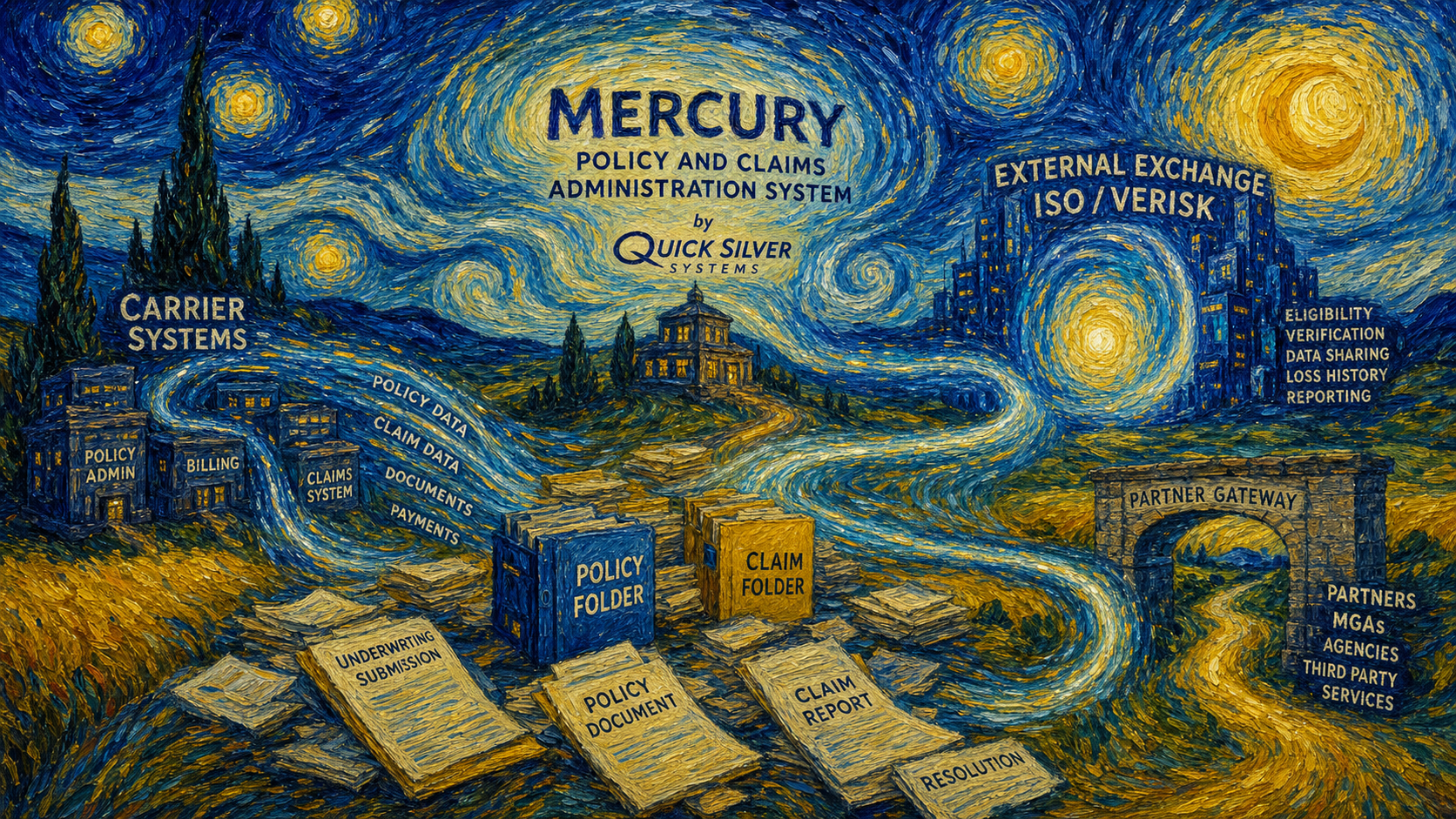
Mercury supports ISO / Verisk partner integration so insurers can connect key workflows to the data and services they rely on—without turning every change into a custom project.
Most organizations recognize the value of third-party data, but the pain typically comes from how that data is accessed and how it is stored. Common symptoms include:
Over time, these frictions become more than an inconvenience—they create audit challenges, increase leakage, and slow down service.
When Mercury is connected to an ISO / Verisk workflow, the goal is simple: keep staff in the system of record while enabling the verification and data sharing steps that the business requires. Practical outcomes can include:
Just as importantly, integration supports repeatability. If your book of business grows or you add new programs, you don’t want a new set of one-off processes each time.
The most sustainable integrations anticipate change: new products, new partners, new compliance expectations, and new internal reporting needs. That’s why it helps to treat ISO / Verisk connectivity as part of an operating model rather than a single interface.
Teams can define which events trigger a data request (quote, bind, renewal, FNOL, subrogation review), who can initiate it, and what documentation should be retained for downstream review.
Integration is also a risk-control story. Centralizing workflow steps inside Mercury helps organizations:
For leaders, this matters because it makes it easier to answer basic questions—what was checked, what was returned, and what decision was made—without assembling evidence manually.
ISO / Verisk integrations should not feel like “extra work.” Done well, they become a natural part of how underwriters and adjusters work—reducing friction, improving cycle times, and helping the organization deliver consistent outcomes.
If you’re evaluating how Mercury can support your ISO / Verisk-connected workflows, Quick Silver Systems can help you map the right integration touchpoints and operational controls for your business.


 Prior
Prior 