
Insurance operations run on information: underwriting dashboards, claim inventory metrics, billing aging, audit trails, and compliance evidence. But many organizations still rely on a patchwork of spreadsheets and one-off extracts that quickly fall out of date. When a report request takes weeks, teams stop asking questions—and that's when avoidable leakage hides in plain sight.
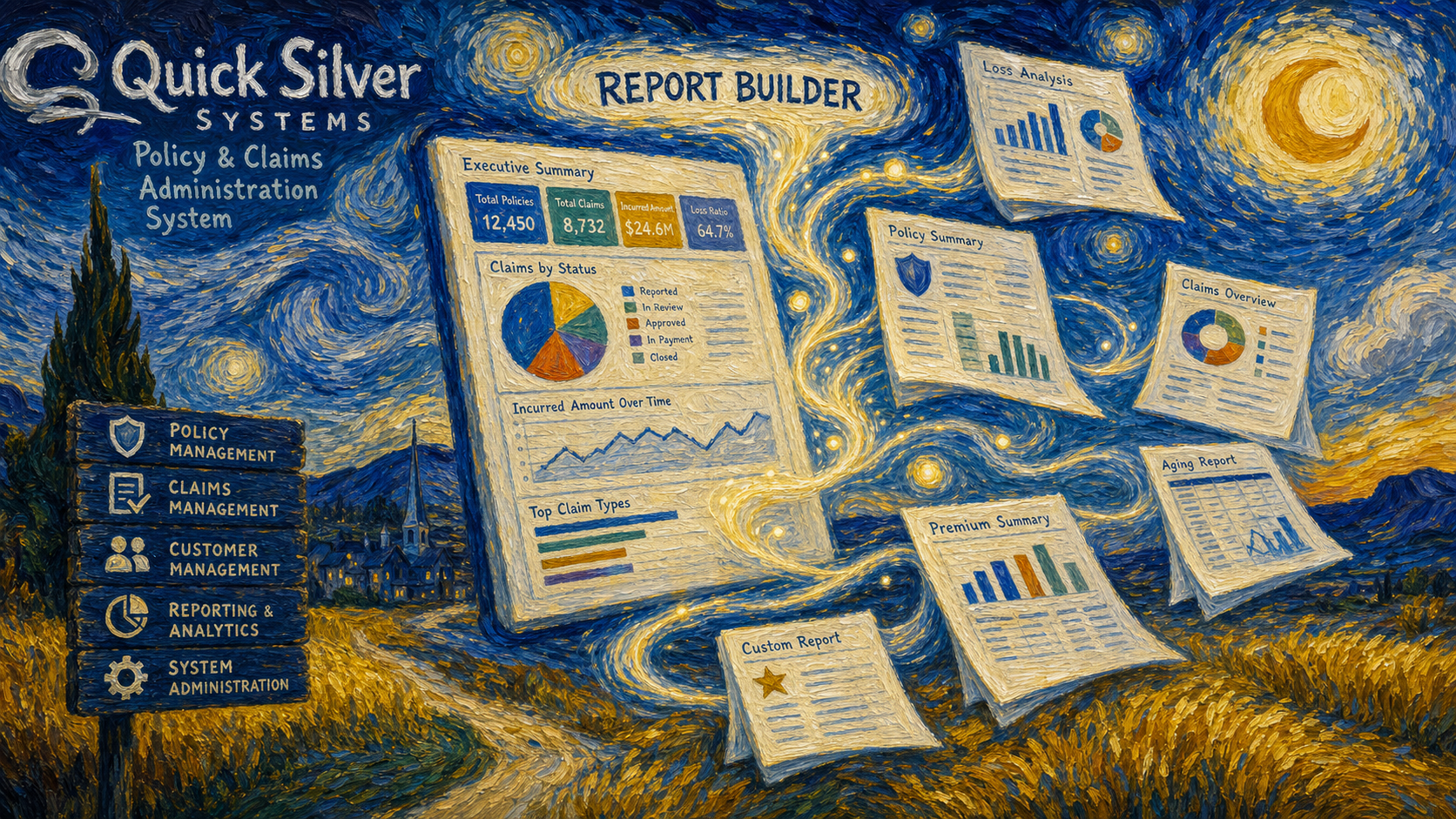
Mercury's report builder is designed to make reporting a first-class part of daily operations. Instead of treating analytics as an afterthought, carriers, MGAs, and TPAs can use reporting to create tighter feedback loops between policy, claims, and billing—so small issues are spotted before they become expensive problems.
Legacy admin ecosystems often have three reporting realities:
Even when the underlying data exists, the organization can't consistently convert it into decisions. The result is operational drift: small process gaps compound over time.
Mercury's report builder supports a more practical model: operational reporting that can be created, iterated, and reused without endless back-and-forth. That matters because the most valuable reports are rarely the first version—they improve as stakeholders refine questions and align on definitions.
Here are common areas where a report builder pays for itself quickly:
Reporting is not just about creating a chart—it's about creating trust. A practical governance approach includes:
With Mercury, the goal is to keep reporting usable for business users while maintaining the discipline required in regulated environments.
The best carriers build feedback loops: they use reports to identify bottlenecks, adjust workflows, and validate whether the change actually worked. That's how you reduce friction without guessing. When reporting becomes easy and consistent, teams spend less time arguing about data and more time improving operations.
If you'd like to see how Mercury supports operational visibility across policy and claims administration, Quick Silver Systems can walk through common reporting patterns and the governance options that make them sustainable.


 Prior
Prior 