
Fraud is a documents problem before it is a payments problem.
Every claim starts with a document: a police report, a repair estimate, a medical bill, a proof-of-loss form. The question is not whether fraud signals are in those documents -- they almost always are -- but whether the platform reads them before the check goes out.
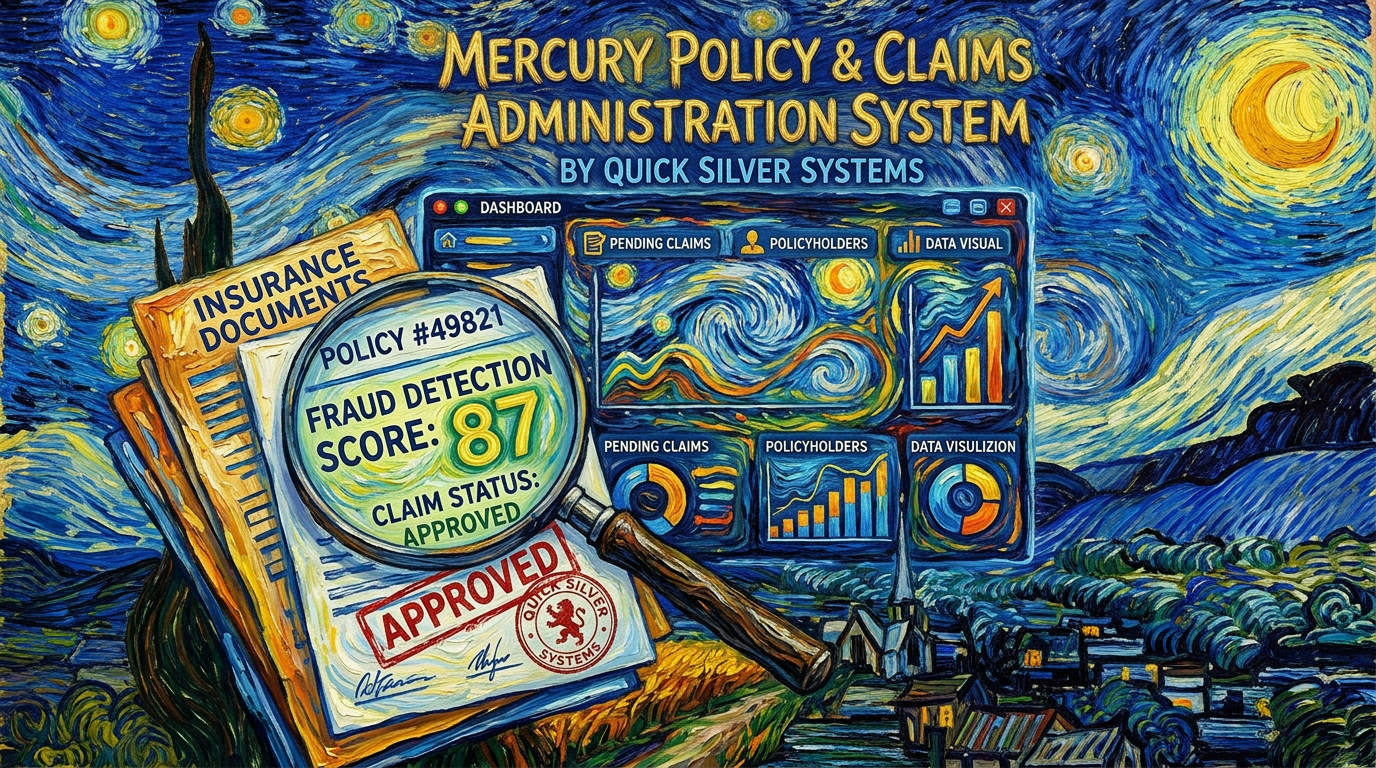
Mercury ingests claim documents through NLP-powered document imaging and runs each one through an AI fraud detection engine that outputs a score from 1 to 100. That score surfaces at the adjuster's workstation alongside the claim record. A repair estimate with inflated labor codes, a medical bill listing procedures inconsistent with the reported incident, a proof-of-loss form with metadata that does not match the reported date -- each of these leaves a signal the platform can quantify before a human decision is made.
The score is an input to the human decision, not a replacement for it. Carriers, MGAs, and TPAs set their own thresholds for escalation. A score above a configurable floor can route the claim to a special investigations unit, flag it for supervisor review, or simply add a notation to the audit trail. The adjuster sees the number and the document evidence behind it. The decision stays with the professional.
What changes is the economics of early detection. Most fraud that gets paid was payable at the document review stage if someone had time to look closely. Mercury creates that time by doing the initial read systematically, on every document, every claim, without the inconsistency that comes from reviewer fatigue or caseload pressure.
#MercuryPAS #QuickSilverSystems #DocumentFraud #ClaimsAdmin #PandCInsurance


 Prior
Prior 